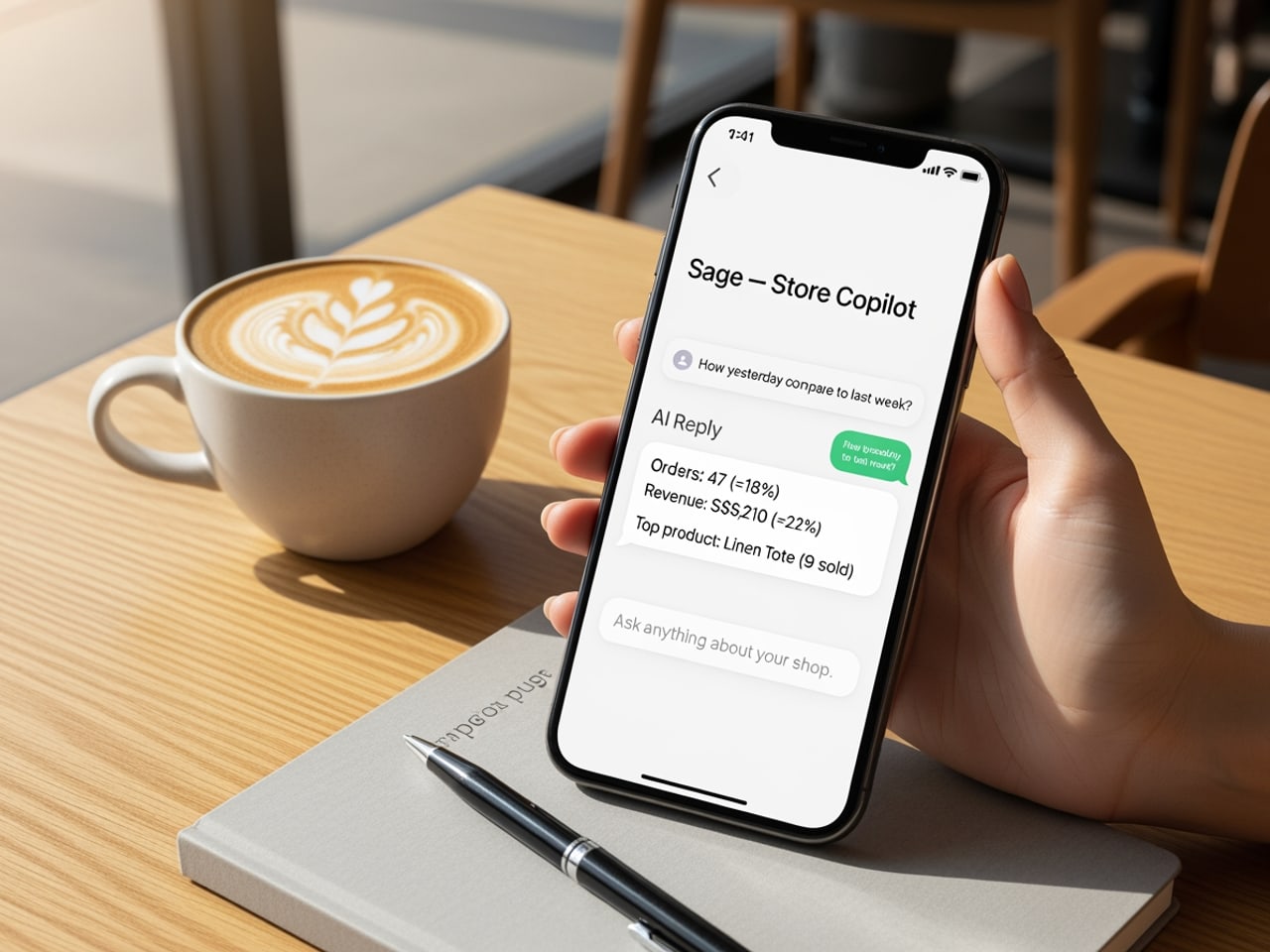
A Singapore checkout is not a card form. It is a tightly arranged set of payment rails, consumer reflexes and reconciliation flows that decide whether a S$180 cart turns into revenue or a refund query on WhatsApp three days later. The right stack for 2026 is Shopify Payments plus HitPay for the local rails. PayNow, GrabPay, Atome. With Stripe reserved for subscription and marketplace cases. Get the express checkout, the abandonment flow and the mobile keyboard order right, and you will see conversion lifts of three to six percentage points without a single new ad dollar.
-
01
Local rails or no sale
Shoppers in Singapore reach for PayNow, GrabPay or Atome before they reach for a Visa. A checkout missing those rails is bleeding 8 to 15% of revenue silently.
-
02
Mobile is the store
More than 78% of Singapore Shopify sessions are mobile. If your checkout pushes the wrong keyboard, breaks Apple Pay or loads slowly on 4G, you lose them at the address field.
-
03
Reconciliation is the boss fight
Multi-rail checkouts create messy payouts. PayNow lands in DBS, HitPay settles T+2, Stripe lands separately. Without one ledger you cannot close books or trust your numbers.
Why this matters for Singapore teams
Singapore is a four-rail country: cards, PayNow, GrabPay and Atome cover more than 95% of online consumer intent. None of those rails is foreign. Each has its own UX expectations, reconciliation cycle and refund pathway. A founder who delivers a US-style Stripe-only checkout into Singapore is leaving the lights off for the local audience and paying a 3.4% card-routing premium for the privilege.
The other Singapore-specific reality is logistics-linked trust. Local shoppers are accustomed to receiving a PayNow confirmation, a Telegram or SMS delivering update from Ninja Van or J&T, and a clear refund window. Your checkout has to telegraph that pattern. A confused thank-you page is the most expensive line of code in your store, because it is the line that triggers the WhatsApp message asking, “did my payment go through?”. And those messages eat support hours that should be going to growth.
PDPA is the quiet third actor. Anything you collect at checkout. Phone, email, address, marketing consent. Falls under the Personal Data Protection Act. You need explicit consent for marketing follow-ups, a clear data residency story for your CRM, and a retention policy your DPO has signed off on. None of that is hard, but all of it has to be in the checkout flow rather than bolted on at month nine.
Finally, Singapore audiences are extremely brand-savvy. A checkout that looks templated, that asks for too many fields, or that buries delivering costs until step four does not get a second chance. The bar is high, and the customers comparing your store are comparing it against Charles & Keith, Love Bonito, Naiise and EuYanSang. All of which have invested heavily in their checkouts.
The four-rail Singapore checkout, layer by layer
The architecture we deliver for Singapore D2C brands has four layers. Each one is a deliberate choice, not a default.
Layer 1. Shopify Payments for cards
Shopify Payments is the right base layer for any store on Shopify or Shopify Plus in Singapore. It avoids the additional 0.5% to 2% third-party gateway fee that Shopify charges when you route cards through Stripe or another processor. It supports Apple Pay and Google Pay out of the box, both of which lift mobile conversion by four to seven percentage points. It also gives you the cleanest Shop Pay express checkout experience, which is a genuine conversion asset for repeat buyers.
Layer 2. HitPay for PayNow, GrabPay and Atome
HitPay is the Singapore-built payments aggregator that gives you PayNow QR, PayNow Online, GrabPay and Atome through a single integration and one settlement account. The Shopify app is mature, the fees are transparent (typically 0.7% for PayNow and 2.5% to 3.0% for GrabPay), and onboarding takes days, not weeks. The alternative is integrating each rail individually, which is six weeks of work for no measurable benefit.
Layer 3. Stripe for subscriptions and marketplaces
Use Stripe when you have recurring billing, usage metering, marketplace splits to multiple sellers, or sophisticated fraud needs (Radar). For a single-brand D2C store on Shopify, Stripe sits alongside HitPay rather than replacing it. For a custom Next.js commerce site or a SaaS layer, Stripe is the right primary processor.
Layer 4. Express checkout and wallet pickers
The express row at the top of your checkout. Shop Pay, Apple Pay, Google Pay, PayPal if relevant, GrabPay express. Is the single highest-converting real estate in the entire flow. We measure 35 to 55% of mobile conversions starting from that row. Tune it. Make sure each button renders on first paint, that the order is correct (Shop Pay first for repeat buyers, Apple Pay first for cold mobile traffic), and that wallet pickers do not break on iOS Safari in private mode.
- Shopify Payments active with Apple Pay and Google Pay enabled
- HitPay app installed with PayNow, GrabPay and Atome live
- Express checkout row tested on iOS Safari, Android Chrome and desktop
- Delivering fees calculated and visible by the cart page, not step three
- Address autofill working with Singapore postal codes (SingPost format)
- Marketing consent checkbox unticked by default, with PDPA language
- Order confirmation page includes WhatsApp support link and tracking promise
- Abandoned cart flow with three touches over 72 hours, PayNow link included
Implementation walkthrough
A typical HitPay-on-Shopify integration is straightforward but has three gotchas that catch new builders. Here is the actual sequence we run.
First, install the HitPay app from the Shopify App Store and connect your HitPay business account. The OAuth flow takes about ten minutes if your business documents are already uploaded to HitPay. Enable PayNow, GrabPay and Atome in the HitPay dashboard, then toggle them on inside the Shopify Payments alternative payment methods panel.
Second, configure the order metadata so PayNow references match your accounting. HitPay sends a payment_request_id with every transaction. Capture it as an order tag using a Shopify Flow trigger so your finance team can reconcile against the HitPay payout report. Without this you will spend two hours every Monday matching PayNow line items by hand.
# Shopify Flow trigger (simplified)
trigger: order/paid
condition: order.payment_gateway_names contains "HitPay"
action:
  - type: addTag
    tags: ["hitpay", "{{order.transactions[0].extended_authorization_attributes.payment_request_id}}"]
  - type: sendWebhook
    url: https://your-erp.example.sg/webhooks/hitpay-paid
Third, wire the abandonment recovery. The default Shopify abandoned cart email is not enough in Singapore. We deliver a three-touch sequence: a Klaviyo email at +1 hour with a one-click PayNow link, a WhatsApp Business message at +12 hours through 360dialog or Wati if the customer has consented, and a final email at +72 hours with a soft 5% discount. The PayNow link in touch one routinely recovers 8 to 14% of abandoned carts on its own. Far higher than the discount-led approach.
For the express checkout, lock down the asset order in theme.liquid so wallets render before the React bundle hydrates. A common mistake is letting the wallet picker depend on a heavy JS bundle, which means it appears two seconds late and 9% of mobile shoppers tap the standard checkout button before it loads.
-
01
Audit current checkout
Pull last 90 days of analytics, identify drop-off points by step and device, list missing local rails.
Deliverable. Two-page checkout audit with conversion math
-
02
Wire HitPay and reconciliation
Install HitPay, enable PayNow, GrabPay, Atome, configure Shopify Flow for order tagging.
Deliverable. Live HitPay integration with payout reconciliation
-
03
Rebuild express row and mobile flow
Tune wallet picker order, fix iOS Safari and Android keyboard bugs, compress hero on cart page.
Deliverable. Mobile checkout passing Lighthouse 90+
-
04
Deliver abandonment sequence
Build Klaviyo email, WhatsApp message and final email touches with PayNow recovery links.
Deliverable. Three-touch recovery flow with attribution
-
05
Two-week conversion review
Compare 14 days before and after launch, isolate rail-by-rail uplift, flag remaining issues.
Deliverable. Conversion report with next-quarter roadmap
Common mistakes
The single most common mistake we see in Singapore is leading the checkout with Stripe-only card form and burying PayNow as the third option behind a small icon. PayNow is not an alternative. It is the default consumer reflex above S$50. Surface it. Use the actual PayNow logo, not a generic QR icon. Test on a real phone with a DBS or OCBC banking app open.
The second mistake is ignoring keyboard behaviour on mobile. The address line should trigger a text keyboard, the postal code field should trigger a numeric keyboard, the phone field should default to +65 with country code locked. Each wrong keyboard adds roughly 0.4 seconds to that field’s completion time, and three wrong keyboards in a row will cost you 5% of mobile shoppers outright.
The third mistake is over-collecting at checkout. Asking for company name, GST registration, marketing preferences, birthday and a referral code on the same page is a kill move. Every additional optional field drops completion by 1 to 3%. Push everything non-essential to the post-purchase page or the order confirmation email.
The fourth is ignoring reconciliation until the books are due. Multi-rail checkouts create payouts on different schedules from different counterparties. Build the ledger first, before launch. Otherwise month two ends with a frustrated bookkeeper and a founder doing data entry at midnight.
- 78%Singapore Shopify traffic on mobile
- +4.2ppAverage conversion lift after adding PayNow
- S$0.70HitPay fee per S$100 PayNow transaction
- 14 daysTypical HitPay onboarding to live
Tools we deliver in
- Shopify
- Shopify Plus
- HitPay
- Stripe
- PayNow
- GrabPay
- Atome
- Klaviyo
- WhatsApp Business
- Shopify Flow
- Shop Pay
- Apple Pay
- Google Pay
What it costs in Singapore (and what SGBP charges)
A clean Singapore checkout build. Adding HitPay with the full PayNow, GrabPay and Atome stack, rebuilding the express row, tuning the mobile flow, wiring abandonment recovery and reconciliation. Runs S$6,000 to S$18,000 at a typical Singapore agency. New full-store builds with a custom theme and the same checkout depth run S$15,000 to S$45,000. SGBP delivers both at half the price because we run from a productised template and a checkout pattern library we have refined across more than 30 Singapore D2C stores.
Frequently asked questions
Which payment gateway is best for a Singapore Shopify store?
For most Singapore D2C brands the right base layer is Shopify Payments plus HitPay. Shopify Payments handles cards cleanly with no third-party fee surcharge, while HitPay adds PayNow, GrabPay and Atome in a single onboarding. Stripe is appropriate when you need usage-based billing, marketplace splits, or strong fraud tooling. The combination covers more than 95% of local checkout intent.
Do I need PayNow on my online store?
Yes for most consumer-facing stores. PayNow QR is the default Singapore consumer reflex for any amount above S$50, and conversion rates on cart values between S$80 and S$400 routinely climb two to four percentage points once PayNow is added. The integration cost through HitPay or Stripe is minimal compared to the lift, and reconciliation is automated.
What does a Singapore checkout build cost?
A clean Singapore checkout build. Shopify Payments plus HitPay, PayNow, GrabPay, Atome, abandonment flows and a mobile-tuned express checkout. Typically runs S$6,000 to S$18,000 at a Singapore agency. SGBP delivers the same scope at S$3,000 to S$9,000, around 50% under typical local rates, because we deliver from a productised template rather than redesigning the wheel.
Should I offer Atome or other BNPL options?
Offer Atome if your average order value is above S$120 and your audience skews 22 to 38 years old. For fashion, beauty, home and electronics in that range, Atome consistently lifts AOV by 12 to 25%. Below S$80 AOV or in B2B contexts, BNPL adds friction and reconciliation overhead without revenue payback. Test for two months before judging.
How long does a Singapore checkout migration take?
A typical migration. Wiring HitPay, PayNow, GrabPay and Atome into an existing Shopify store, plus reconfiguring abandonment flows and Consent Mode. Takes two to three weeks end-to-end. Fresh store builds with a designed checkout, A/B test plan and analytics layer take four to six weeks. SGBP runs both timelines with a fixed scope and weekly demos.
If your Singapore checkout is missing PayNow, leaking on mobile, or sending you into reconciliation hell every month, we can fix it in a fortnight. Message us on WhatsApp for a same-day reply, or book a call and we will walk through your funnel together with a fixed scope and a fixed price.